

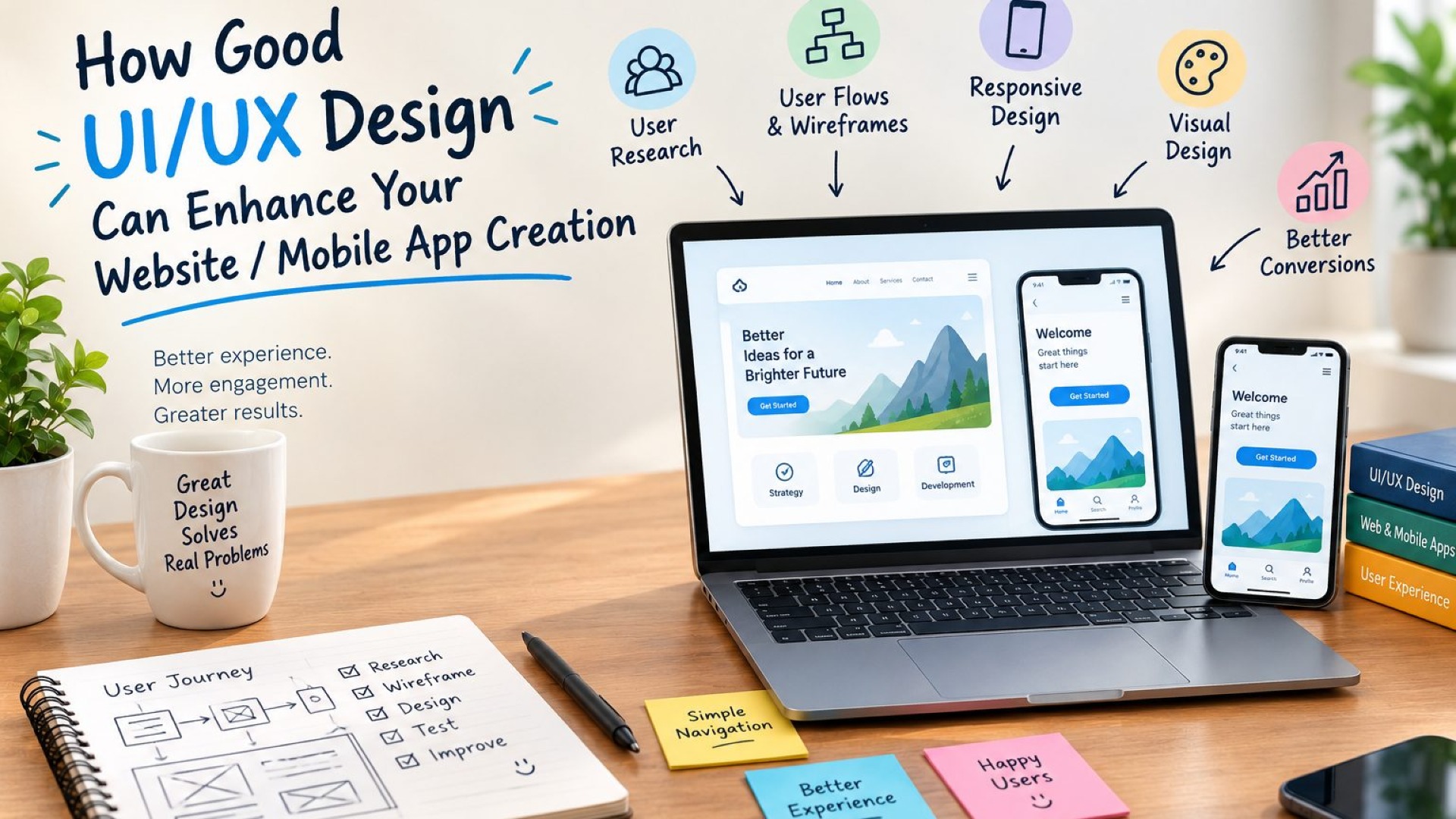
How Good UI/UX Design Can Enhance Your Website / Mobile App Creation
Although a website or mobile app may deliver on essential functions, it's not always designed in such a way that it would provide a satisfying experience for the users.
This can turn away potential customers if the processes they have to go through are not intuitive or easily accessible.
UI/UX design is crucial in creating the framework that determines the general feeling a user will have when navigating through a digital space.
UI (User Interface) and UX (User Experience) design are terms which refer to closely related but ultimately different areas of the design field.
While UI contains more of the visual aspects of designing interfaces, UX focuses on the user aspect of digital products.
UI/UX design ultimately informs and guides the creation of a website or mobile application in order to produce a desirable and effective outcome.
Why Is UI/UX Important?
Suppose there is an online clothing store with an interface where users have difficulty finding what they are looking for, confusing buttons, and an overly tedious purchasing process.
Despite there being good products, the combination of these factors reduces the shopping experience, and users may be turned away from the site.
This could've been avoided through good UI/UX design which streamlines these processes.
Good UI/UX can contribute to:
• Improved functionality and accessibility of the website
• Enhanced mobile user experience
• Overall reduction in user confusion
• Improved discoverability of key features
• Building an engaging and unified experience across the board
• Increased user engagement and conversions aligned with the company's goals
1. Know the User in Order to Serve Them Better
UX design is less about the aesthetics of something and more about the end goal the user wants to achieve by using a product.
The designer has to know who those users are in order to devise a structure that anticipates their needs and removes any potential obstacles they may encounter during their 'journey.'
A combination of good visuals and functionality will create a positive experience which not only satisfies but also attracts more users to the platform.
2. User Flows Define the Path Taken by the Visitor
One of the primary principles of UX design is ensuring that a person will know what to do at any given time.
The designer anticipates the thought process of the user. For example, for a service-based business, upon visiting the website they should know what the company offers, which service they are interested in, how they can obtain more info about the service, and how they can get in touch with the company.
UX designers create user flows and wireframes to identify these touch points before bringing the interface to life.
3. There Are More Mobile Users Than Ever Before
A large proportion of website visits these days are made via mobile devices, instead of computers.
A mobile interface needs to be thought through carefully, as it is often more difficult to design something that is accessible and intuitive on a smaller screen.
The arrangement of text, buttons, fields, visual content and other elements must be done in a way that takes into account the limitations of a mobile platform.
4. UI Aesthetic Provides a Unified Look and Feel
UI deals with the creation of a visual language of the product. The look of the website is important as it makes the first impression on the visitor.
The arrangement of text (including font, weight, and size), button placements, colors, icons, images, and other visual components inform one another to create a coherent design.
UI creates consistency which allows the visitors to move through the website without confusion.
5. The UX Can Increase Conversions and Promote the Bottom Line
Another very important aspect of the UX design is its ability to help reach the bottom line by convincing the customer to take action.
Depending on the type of business, that can mean different things: completing a purchase for an e-commerce website, filling out an inquiry form for a service-based business, or even registering for a course at an educational platform.
The less obstacles are placed in front of the customers, the better for the business.
6. UI/UX Design Offers More Than Just Web Design
UI/UX design is an umbrella term that encompasses a variety of areas, both beyond and within the web.
Some examples of deliverables offered by a UI/UX designer can include:
• Visual and interaction design for mobile applications
• Software and dashboards design for businesses
• UI/UX design for e-commerce platforms
• Web design and development
• Redesign of existing websites or products/branding
• User journey, flow and wirefraiming
• User research and analysis
• Collaboration with developers to bring the idea to life
For applications which hold a great volume of data, such as enterprise level software, organizing it into accessible and attractive blocks can make the work of an employee significantly easier.
Dfine's UI/UX service area covers mobile application design, software/dashboards design, redesign of existing products/branding and user flows/wireframing. The agency emphasizes business understanding, user researching, experience structuring during the discovery phase, interface design, feedback and developer handoff, and usability validation.
7. Good Design Meets the Needs of the Business
Ultimately, what determines the 'success' of a design is how it serves the end user in such a way that it furthers the mission of the company that hired the designer. The design must be useful and easy to navigate for the customer, but at the same time it needs to provide a convenient pathway to achieving whatever goal is desired by the business (e.g. more conversions, registrations, or sales).
Final Remarks
UI/UX design is an indispensable tool in the creation of anything from a simple website or mobile app. While an aesthetically pleasing interface is a plus, a properly structured and intuitive site can offer a more engaging and enriching experience for the user.
By taking into account the end user and their needs and behaviours, aligning it with the client's goals, establishing a coherent framework that will guide the user smoothly throughout the digital interface, and implementing continuous feedback and improvement, an experienced designer can create a platform that can satisfy and delight its visitors.
Related Blogs

Content Marketing: How Valuable Content Helps Businesses Grow

PCB Design Process Explained: From Schematic to Final Board Layout

Social Media Marketing for Small Businesses: How to Turn Followers into Customer

Need Our Help With a
Digital Project ?
Share your requirements and we’ll get back to you with how we can help.